
White Nectarine-Lavender Jam
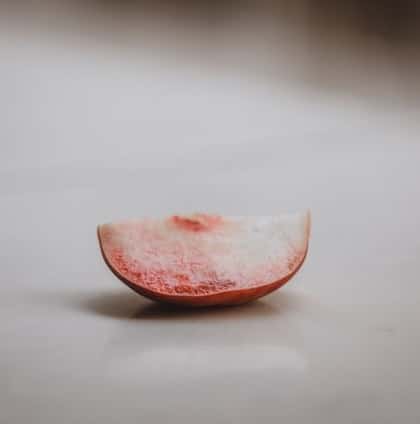
Created and contributed by Karen Killebrew, White Nectarine-Lavender Jam is a low-sweetener cooked jam made with Pomona’s Universal Pectin. Pomona’s Pectin contains no sugar or preservatives and jells reliably with low amounts of any sweetener.
Notes
Note about culinary lavender: Depending on when the lavender was picked, your dry lavender flowers may vary in intensity. We grow our own, and harvest and dry the buds in late May or early June, when the flowers are just fully opened. Once we remove the flowers from the stalks, we store the buds in glass jars in a dark cabinet. When the flowers are freshly dried, simmering brings out a pretty lavender color and a more intense flavor. I suggest you try the jam in a small batch the first time to see how strong the lavender flavor is, and then adjust the amount of lavender flowers in future batches accordingly. You may also add 1-2 drops of lavender oil after simmering and steeping the fruit with the lavender if you’d like a stronger flavor.
Servings 5 cups
Ingredients
- 1 to 2 Tablespoons lavender buds/flowers in cheesecloth bag or tea ball. *See Note below about culinary lavender.
- ½ cup water
- 4 cups white nectarines unpeeled, chopped, and mashed (chopped to ¼” dice)
- ¼ cup lemon juice bottled
- 4 teaspoons calcium water see step #1
- ¾ cup agave syrup
- 3 teaspoons Pomona’s Pectin mixed with sweetener
Instructions
- Before you begin, prepare calcium water.To do this, combine ½ teaspoon calcium powder (in the small packet in your box of Pomona’s pectin) with ½ cup water in a small, clear jar with a lid. Shake well.Extra calcium water should be stored in the refrigerator for future use.
- Prepare boiling water canner. Heat jars in simmering water until ready for use. Wash lids and bands and set aside.
- Bring water and lavender to a simmer in a large pan and simmer for 10 minutes. Add mashed nectarines and lemon juice. Bring to a simmer and simmer uncovered, stirring occasionally, for about 10 minutes, until fruit starts to release juices.
- Remove from heat. Cool in a bowl, then cover and let steep for 2-4 hours in the refrigerator. Remove lavender.
- Measure out 4 cups and return fruit to pan. If you are a little short of the 4 cups, just add some water to make 4 cups. Add 4 teaspoons of calcium water and mix well.
- Measure agave into a bowl. Thoroughly mix pectin powder into agave. Set aside.
- Bring fruit mixture to a full boil. Add pectin-agave mixture, stirring vigorously for 1 to 2 minutes to dissolve the pectin while the jam comes back up to a boil. Once the jam returns to a full boil, remove it from the heat.
- Remove hot jars from canner and fill jars with (marmalade/jam/jelly), leaving ¼ inch of headspace. Remove trapped air bubbles, wipe rims and put on lids and screw bands, tightening bands only to “fingertip tight” (until resistance is met, and then just the tiniest bit more).
- Place jars in the hot water, on the rack inside the canner. (Make sure jars are upright, not touching each other or the sides of the canner, and are covered with at least 1-2 inches of water). Place the lid on the canner, bring the canner to a rolling boil, and boil for 10 minutes. (Add 1 minute additional processing time for every 1000 feet above sea level.)
- Turn off heat and allow canner and jars to sit for 5 minutes. Then, remove jars from canner. Allow jars to cool undisturbed for 12-24 hours. Then, confirm that jars have sealed, then store properly. Eat within 1 year. Lasts 3 weeks once opened.
Just curious to know what the calcium water is fir
Pomona’s Pectin is activated by calcium, so calcium has to be present in the mixture either naturally or added by you. Since most people don’t know the calcium content of their fruit, we recommend a calcium water amount in every recipe to be sure there is calcium in the mixture. If your fruit has calcium in it naturally, you don’t need to add the calcium water.
The calcium water (1/2 teaspoon calcium powder mixed into 1/2 cup water) can be stored in the fridge for several months, and will just need to be tossed if it has any floating bits or smell or color. It can also be stored in the freezer where it will keep indefinitely, but will need to be thawed before use. We also highly recommend labeling your jar of calcium water, as it seems to be the first item tossed when cleaning the fridge/freezer.
While this recipe sounds delicious, it’s not safe to can white nectarines or white peaches because of their low acidity levels and potential to develop botulism. I might consider amending this recipe to reflect that, and recommend for freezer or fridge storage only.
Hey! If I were to use cane sugar for this recipe instead of agave nectar, how much would I use? Also, would I be able to swap some sort of tea, like white green tea or earl grey instead of using lavender? I am allergic to lavender. I assume you can just steep it in the same way?
Hello Katy! You can certainly use sugar in place of the agave, you will use 1 to 1 1/2 cups of sugar for this recipe. We have never used another “tea” for this, but we believe it should work well just steeping it like you would the lavender.
Happy jamming!
I will let you know how it goes. Peach green tea is one of my favourites. Nectarine is my favourite fruit, so I figured itd be really good with white green tea. Plus, green tea is acidic so I am sure it’ll be fine. Thank you for responding!
Oops, nevermind. Its alkaline in nature. Thought I would correct myself. Don’t want to give misinformation!!